
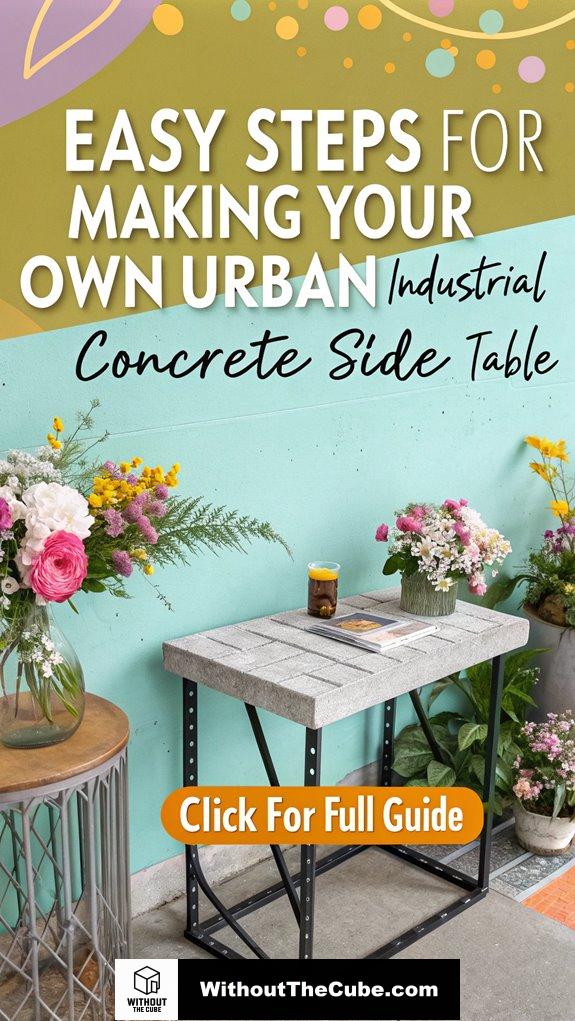
Ever thought about crafting your own urban industrial concrete side table? Believe me, it’s not as daunting as it sounds!
I remember when I first attempted this. My living room needed a makeover, and I thought, “Why not channel my inner DIY guru?” Spoiler alert: I had concrete everywhere.
First, I sketched a design—because who doesn’t love a good plan? Then, I gathered my trusty melamine for a mold. Mixing concrete is like baking, just without the delicious outcome.
After pouring it in, I eagerly waited. The patience was real! Once it set, I sealed it with non-toxic goodness and slapped on some metal accents. Voilà! Instant bragging rights.
If you’re feeling adventurous, stick around for more tips on turning your space into a masterpiece. Let’s get our hands dirty!
A Client’s Journey: The Concrete Side Table Transformation
I once worked with a client who thought concrete tables were too heavy and dull. Fast forward to our project together, and they were blown away by the sleek finish and added character it brought to their space. We even incorporated a splash of color to complement their decor. It’s amazing how a simple piece can elevate a room! Who knew that concrete could be so chic?
Key Takeaways
- Select a sturdy mold material, like melamine or plywood, and prepare it with a release agent for easy concrete removal.
- Mix a concrete ratio of 1:2:3, adding water slowly to achieve a cake batter-like consistency, and include additives for improved workability.
- Pour the concrete into the mold, ensuring it’s level, and use trowel techniques for smooth spreading while preventing air bubbles.
- Allow the concrete to cure for at least 24 hours, controlling the temperature to minimize cracking and shrinkage.
- Finish the table by sanding edges, applying a water-based sealer, and adding metal accents for an industrial aesthetic.
Plan and Design
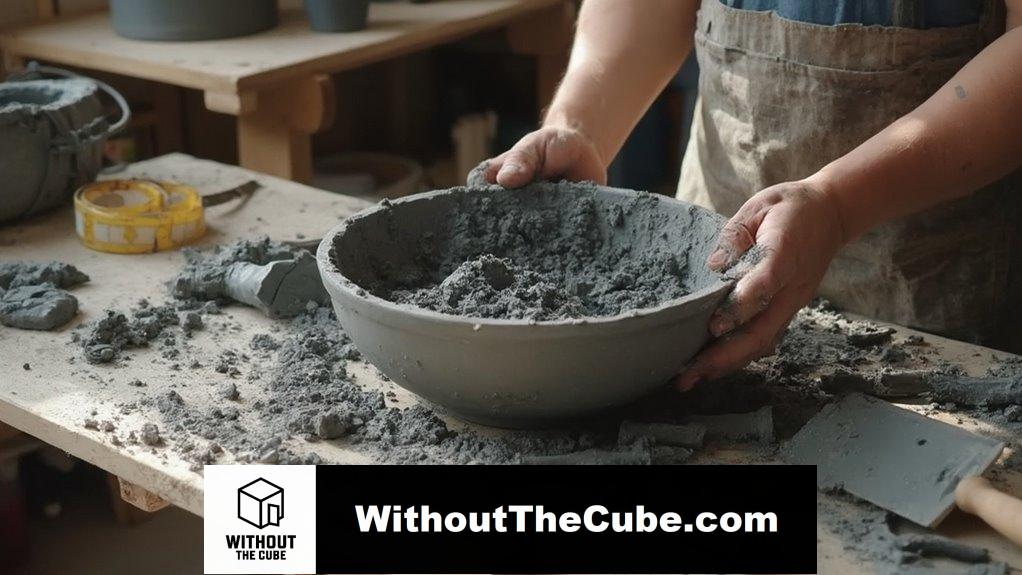
Planning and designing an urban industrial concrete side table starts with understanding the materials and aesthetics that define this style.
I’ve found that design inspiration often strikes when you explore fiber-reinforced concrete for durability and elegance. The use of 70% Fiber-reinforced Concrete ensures enhanced durability compared to traditional concrete, making it an ideal choice for furniture. incorporating industrial design principles can create a cohesive look that highlights the raw beauty of concrete.
Material selection is essential; think dark grey tones and natural textures.
Don’t forget to visualize how your piece fits into your space—it’s all about blending functionality with that stunning industrial vibe!
Prepare the Mold
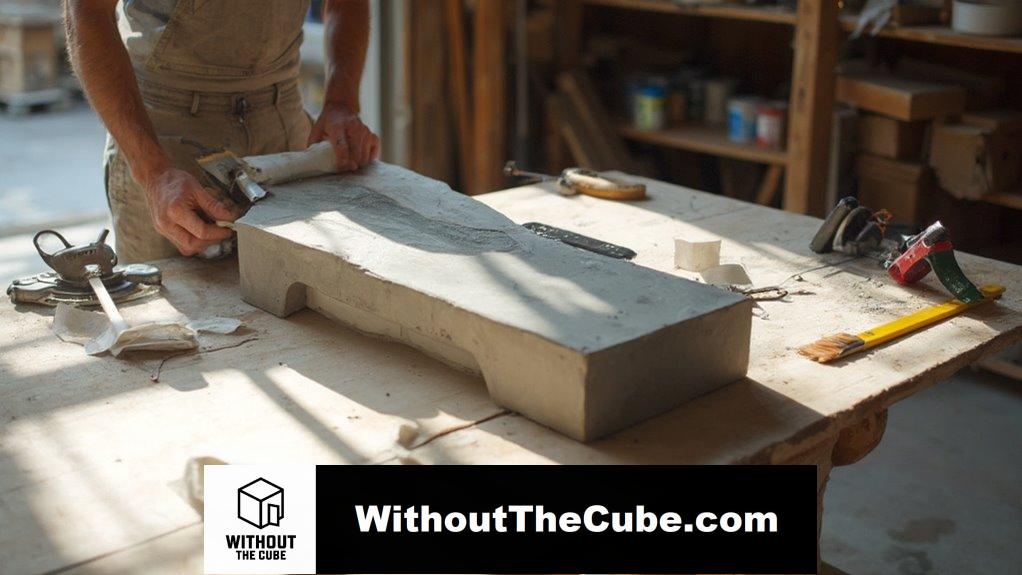
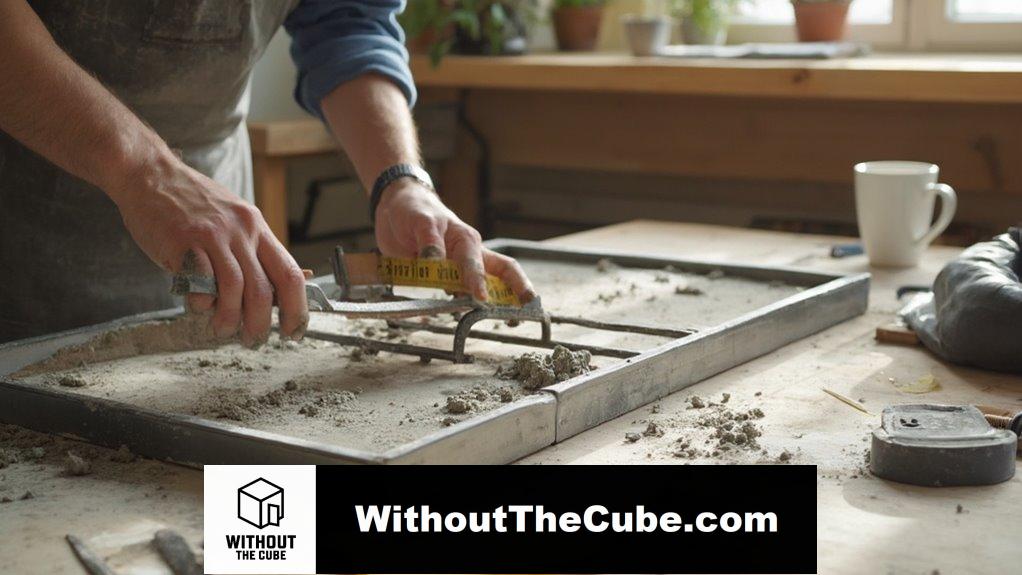
When preparing the mold for my urban industrial concrete side table, I always start by selecting a sturdy material like melamine for the mold base. I cut it to size, then create side strips taller than my desired thickness. Recall to seal gaps with duct tape and apply a release agent! using a 22-inch metal drip pan serves as an effective mold for pouring the concrete. Regular mold maintenance keeps my projects looking sharp and clean. To ensure the best results, it’s important to use high-quality concrete mix that will provide durability and a sleek finish. Ready to innovate?
Mix Concrete
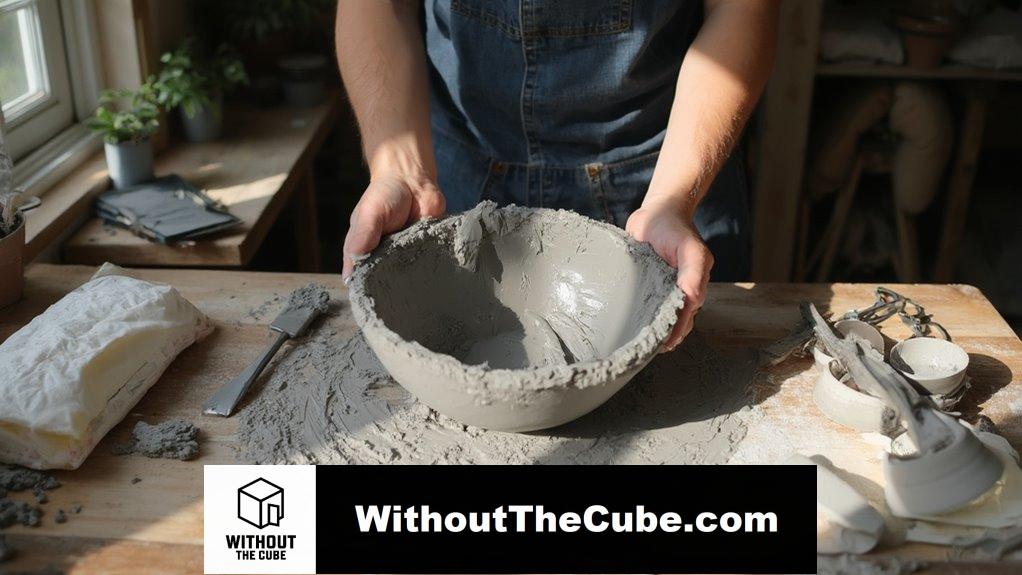
With the mold ready, it’s time to mix the concrete for my urban industrial side table.
I like a classic mix ratio of 1:2:3, just perfect for strength. Incorporating modern concrete techniques can elevate not just the aesthetics but also the durability of your piece.
Don’t forget those concrete additives, like superplasticizers, to make it super workable! Recall, we want that cake batter-like consistency, so add water slowly and mix until it’s all blended. Achieving the right water-cement ratio is crucial to ensure the durability and workability of the concrete.
Fun, right?
Pour Concrete
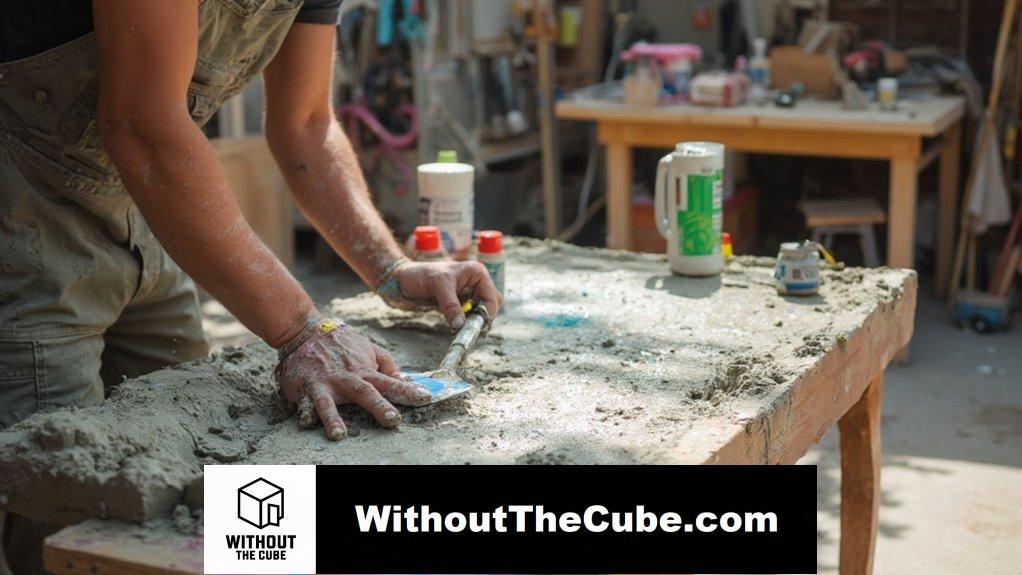
Now that I’ve mixed the concrete to perfection, it’s time to pour it into the mold. I make sure the form is secure and level, then use my trusty trowel for those smooth pouring techniques. It’s all about spreading the concrete evenly and keeping an eye on it until it sets. To achieve a unique look, consider adding coloring agents to your mix for a stylish finish. Remember, using Quikrete 5000 concrete mix will help ensure a strong and durable finish. Trust me, with the right concrete tools, you’ll nail this!
Add Texture
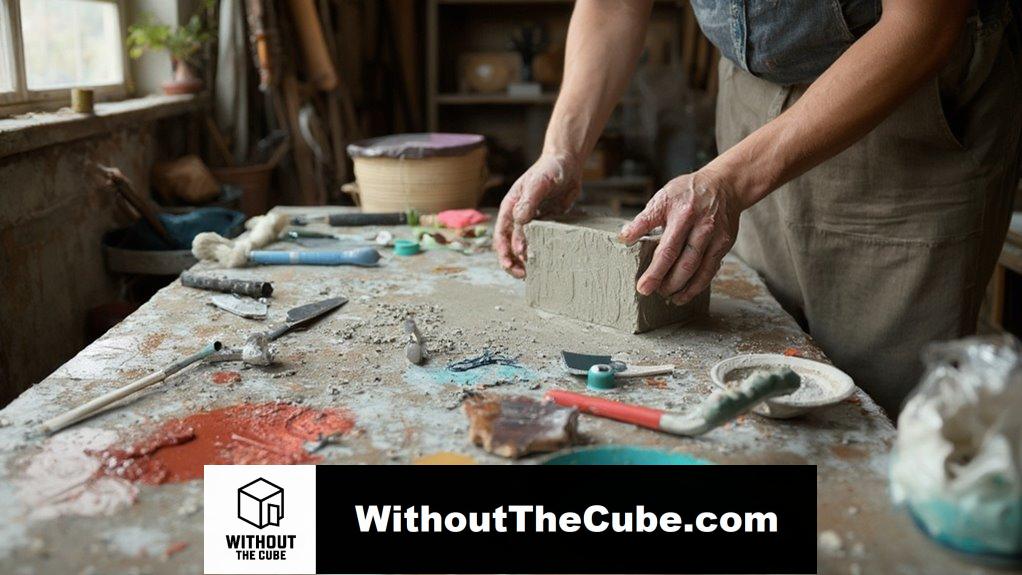
After pouring the concrete, adding texture can really elevate the design of your side table. I love using stamped patterns to mimic materials like stone or wood—it’s such a game changer! You can also play with textured finishes and color variations by incorporating integral color into your mix. using recycled concrete slabs not only enhances the design but also promotes sustainability. Furthermore, consider incorporating stylish textural concrete techniques that can transform your piece into a work of art. Trust me, your side table will be a stunning conversation starter, bringing a unique flair to any room!
Cure
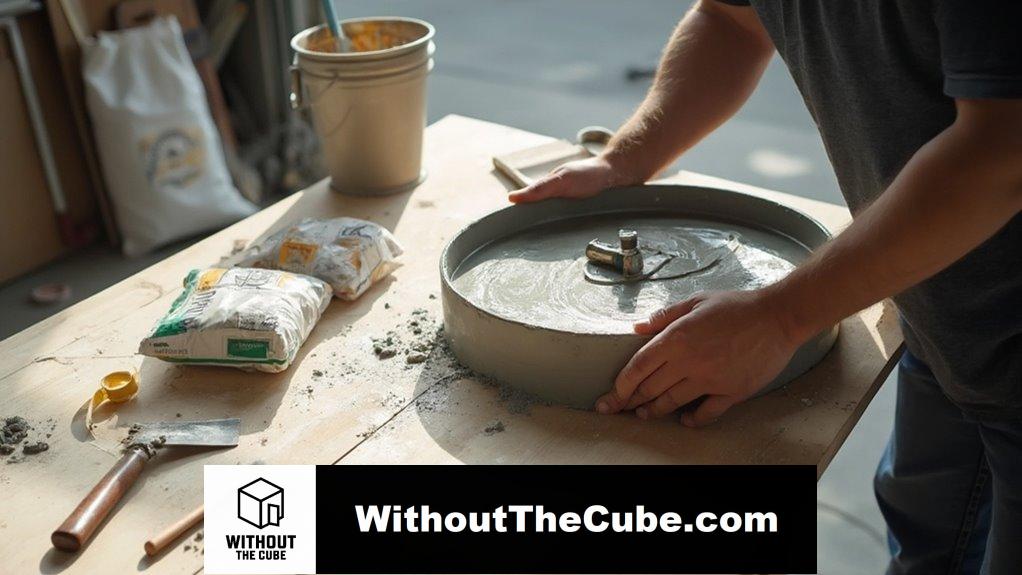
Curing is an essential step in the concrete creation process that I can’t emphasize enough.
The right curing techniques, like wet curing or using blankets, keep our concrete strong and fabulous. Proper curing minimizes risks of cracking and shrinkage, ensuring our project remains durable and visually appealing. using the correct curing methods can enhance the overall finish of your concrete surface.
Plus, temperature control is key—aim for that sweet 68-77 degrees Fahrenheit.
Trust me, your concrete side table will thank you later!
Let’s make sure it’s as sturdy as it’s stylish!
Remove From Mold
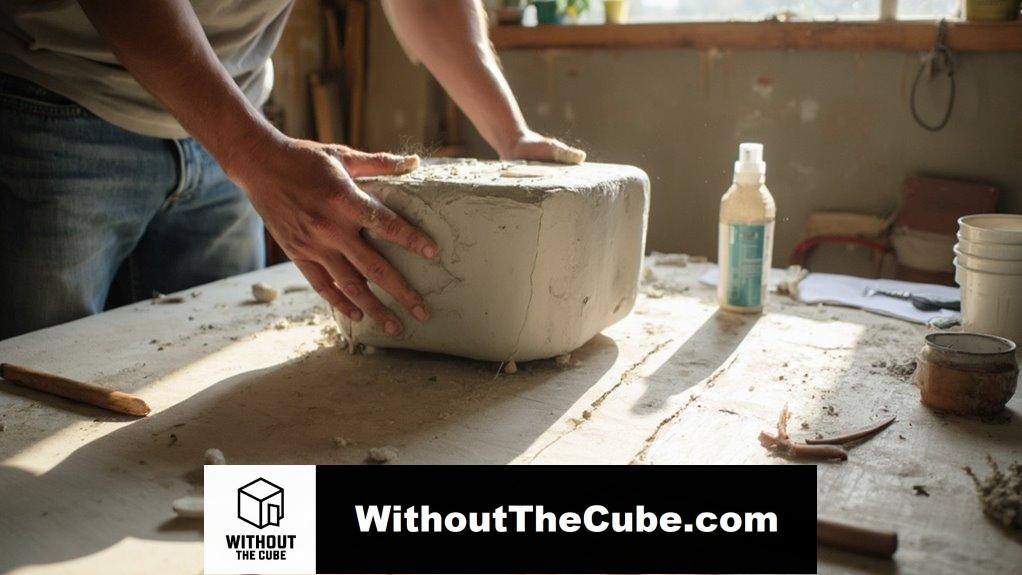
Once the concrete has fully cured, it’s time to carefully remove it from the mold.
I love using mold release to combat concrete adhesion! For rigid molds, try the ice and water method—just fill it up, wait a few minutes, then drain.
You’ll be amazed at how easily it releases! Just keep in mind, gentle handling is key to keeping your masterpiece intact. consider incorporating stylish concrete tabletop ideas to enhance the aesthetic of your creation.
Happy crafting, friends!
Finishing Touches
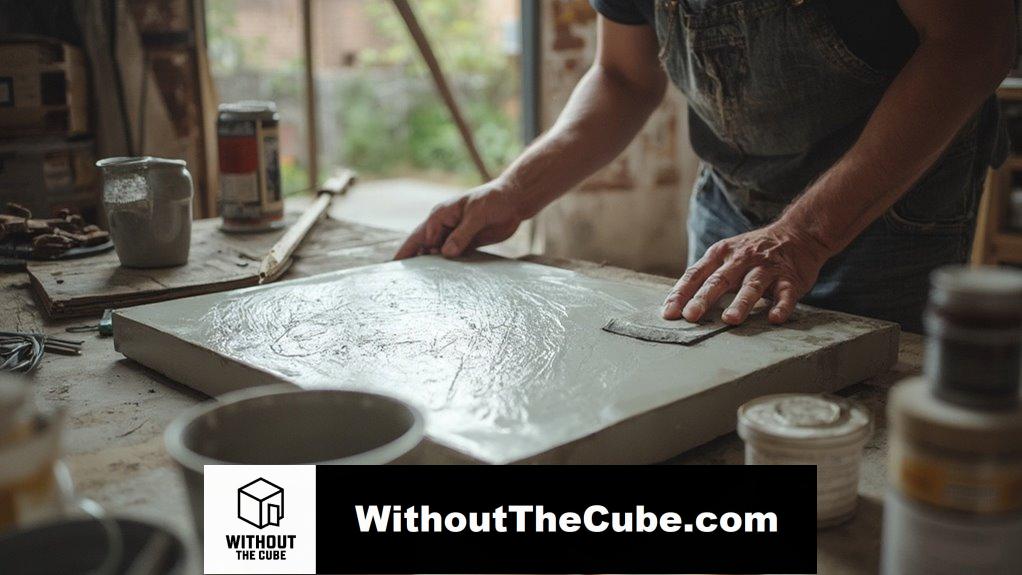
As I plunge into the finishing touches of my urban industrial concrete side table, I focus on achieving the perfect look and feel.
I love using finishing techniques like a polished finish to bring out that sleek vibe.
After that, I’ll choose a sealing method, maybe a water-based sealer, to protect my creation. Adding unique elements, such as creative design accents, can further enhance the overall aesthetic of the piece.
Isn’t it exciting to elevate our spaces with unique designs?
Assembly
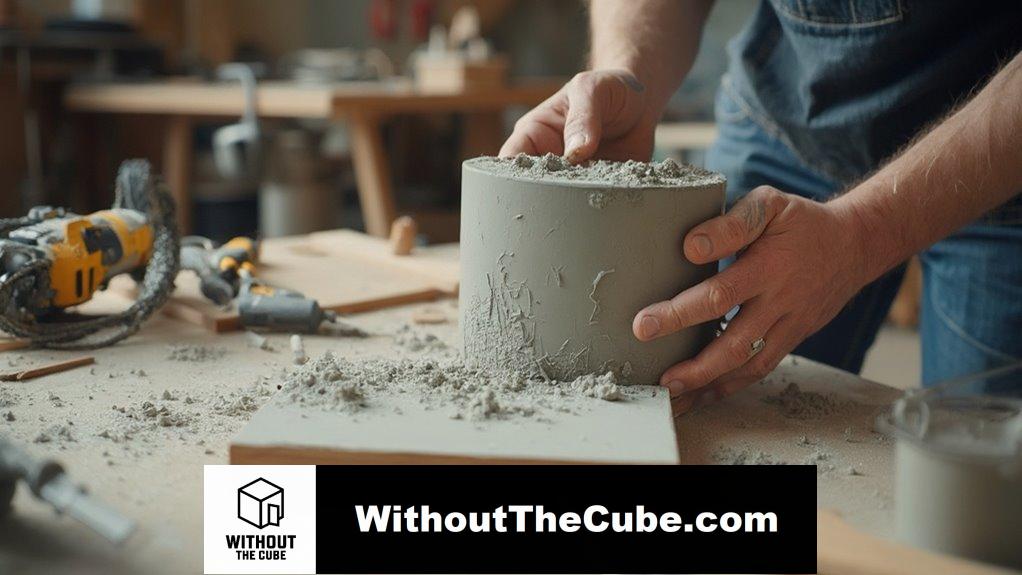
In preparation for assembling my urban industrial concrete side table, I gather all the necessary materials and tools.
First, I create the melamine form, using assembly techniques like drilling pilot holes for easy screw insertion.
Then, I cut the legs, attach them with hardware, and secure everything tightly.
It’s all about precision and creativity—who knew assembly materials could be this fun? To achieve a professional finish, ensure you follow the right curing techniques for the concrete mixture.
Let’s make something awesome together!
Unique Tabletop Decoration Ideas
Transforming your urban industrial concrete side table into a stunning focal point is all about choosing the right tabletop decorations.
I love combining vibrant floral arrangements with sleek industrial accents, like metal vases or candle holders.
Try a tiered tray for added height, or stack bowls of fresh fruits.
It’s all about balance and creating that eye-catching vibe!
Ready to impress? Let’s get decorating!
FAQ
How Long Does Concrete Take to Fully Cure Before Use?
I’ve learned that concrete takes about 28 days to fully cure, essential for achieving ideal concrete strength. The curing process is imperative; without it, you risk premature cracks and weak structures. Patience really pays off!
Can I Use Colored Concrete for My Table?
I know you might worry about color fading, but using colored concrete techniques with effective dye application methods can create stunning, durable tables. Embrace innovation—your table can be both stylish and resilient!
What Are the Best Sealing Options for Outdoor Concrete Tables?
When considering sealing options for outdoor concrete tables, I’ve found that using durable acrylic or epoxy coatings enhances outdoor durability. These sealing techniques not only protect against elements but also elevate the table’s overall aesthetic appeal.
How Do I Transport a Finished Concrete Side Table?
When I transport my finished concrete side table, I always follow key transport tips and moving precautions. I secure it with straps, use an A-frame for support, and guarantee it’s padded to prevent damage.
Is It Safe to Use Concrete Indoors?
While concrete’s durability excites me, I’m cautious about its toxicity. However, its low VOC emissions enhance indoor air quality, making it a safe choice for innovative designs, as long as I manage moisture properly.
Summary
I’ve turned a simple bag of concrete into a sleek urban industrial side table that enhances my living space. This DIY project demonstrates how everyday materials can be transformed into stylish home decor. It’s satisfying to create something unique.
I’d love to hear about your own DIY experiences. What projects have you tackled, and how did they turn out?
If you found this post helpful, please share it on social media to help spread the word about Without the Cube!
Leave a Reply